24/7 Emergency Electrician Service - Call (615) 716-3086

Springfield, TN · Robertson County

Generator Transfer Switch Installation & Repair in Springfield, TN

Rapid Electrician Pros provides the changeover hardware between your generator and your panel: manual transfer switches and interlock kits that move chosen circuits onto generator power without ever backfeeding the grid, exterior inlet boxes, and diagnosis of changeover gear that binds, buzzes, chatters or drops its load mid-outage. Call for a diagnosis first and a clear price before any work begins: (615) 716-3086.

Mon-Fri 7AM-7PM · Sat 8AM-4PM · 24/7 Emergency · Based at 5325 Main St, Spring Hill, TN 37174

  • Transfer Switch Installation · Springfield, TN 37172
  • Diagnosis and price before work starts
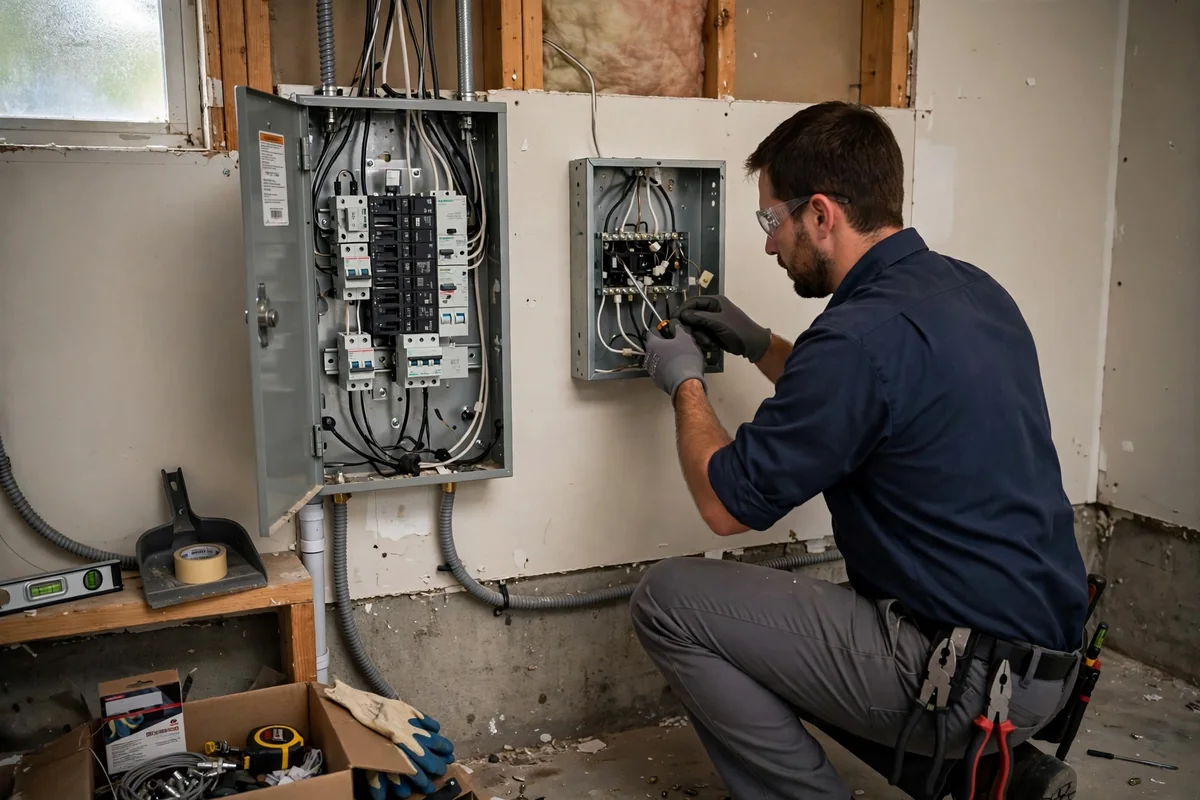
Electrician installing a generator transfer switch beside a main panel in a Springfield, TN home
Springfield · Transfer Switch Installation

Transfer Switch Installation: What This Service Covers

Springfield calls for transfer switch installation rarely start with the service name; they start with a symptom that kept repeating. The work behind the symptom is the changeover hardware between your generator and your panel: manual transfer switches and interlock kits that move chosen circuits onto generator power without ever backfeeding the grid, exterior inlet boxes, and diagnosis of changeover gear that binds, buzzes, chatters or drops its load mid-outage. Our coverage runs all of 37172, including streets along the Springfield Greenway, and properties near Sulphur Fork Creek and the Springfield Greenway deal with humidity and storm runoff that can corrode outdoor electrical equipment. Springfield's position, roughly thirty miles north of Nashville in the Highland Rim, gives it hot summers, genuine winters and fast-moving storm fronts, a combination that ages electrical equipment on its own schedule.

Changeover work is tested, not assumed. We put a meter on the generator's output, then exercise the switch through full transfers while the transferred circuits carry real load, watching contact behavior, timing and voltage on both sources. A switch that clicks over empty can still chatter, arc or drop out when a motor starts, and that difference is the whole diagnosis. Contact condition, linkage travel and coil response decide whether the visit ends in an adjustment, a parts repair or an honest replacement conversation.

Signs You Need Transfer Switch Installation

  • Generator runs in the yard but the house stays dark
  • Extension cords through a window are your outage plan
  • Transfer switch handle is stiff, stuck or will not seat
  • Circuits fed by the generator flicker or drop under load
  • Backfeeding risk: generator connected straight to a dryer outlet
  • Standby generator starts but the house never transfers over

One sign in isolation can often wait for a weekday slot. Patterns are different: repeats, combinations, and any hint of heat or burning should be treated as same-day problems. Our guide to common electrical problems explains which symptoms can wait and which cannot.

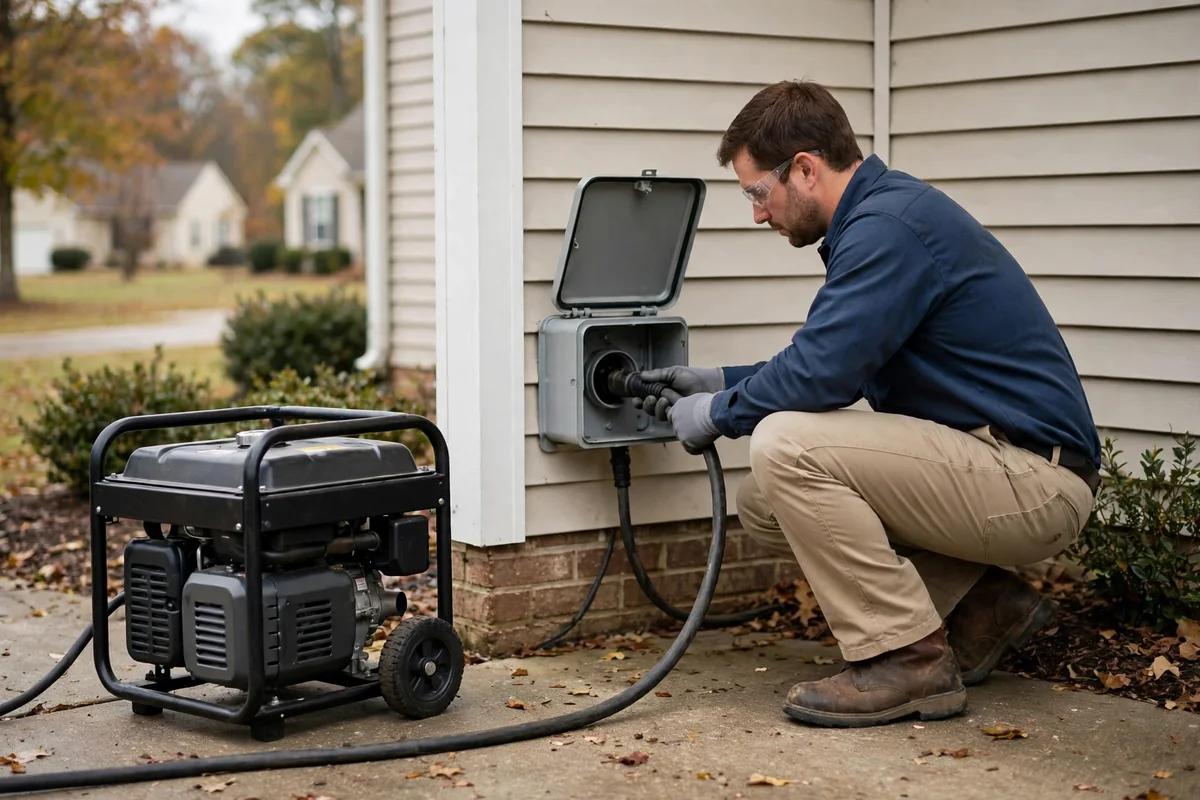
Electrician connecting a portable generator to an exterior inlet box in Springfield

How We Diagnose It

Changeover work is tested, not assumed. We put a meter on the generator's output, then exercise the switch through full transfers while the transferred circuits carry real load, watching contact behavior, timing and voltage on both sources. A switch that clicks over empty can still chatter, arc or drop out when a motor starts, and that difference is the whole diagnosis. Contact condition, linkage travel and coil response decide whether the visit ends in an adjustment, a parts repair or an honest replacement conversation.

Whatever the readings show, the visit ends with evidence on the table: the failed part in view, the options in plain terms, and a figure you approve before a single repair starts.

The Springfield Call Pattern

Robertson County ice storms write this page's call log. Homeowners who ran a portable generator on extension cords through one outage arrive at the switch conversation before the next season. The repeat detail is the well pump: properties outside the city water core discover during the rehearsal that their chosen circuits forgot the one load that matters most.

Our Transfer Switch Installation Process

1

Load list built with you: the circuits that matter in a Robertson County outage

2

Switch type chosen: manual transfer switch, interlock kit or automatic switch

3

Switch, inlet box and generator cord connections installed and labeled circuit by circuit

4

Live rehearsal: utility power off, generator running, every chosen circuit proven under load

The Outage Rehearsal Nobody Regrets

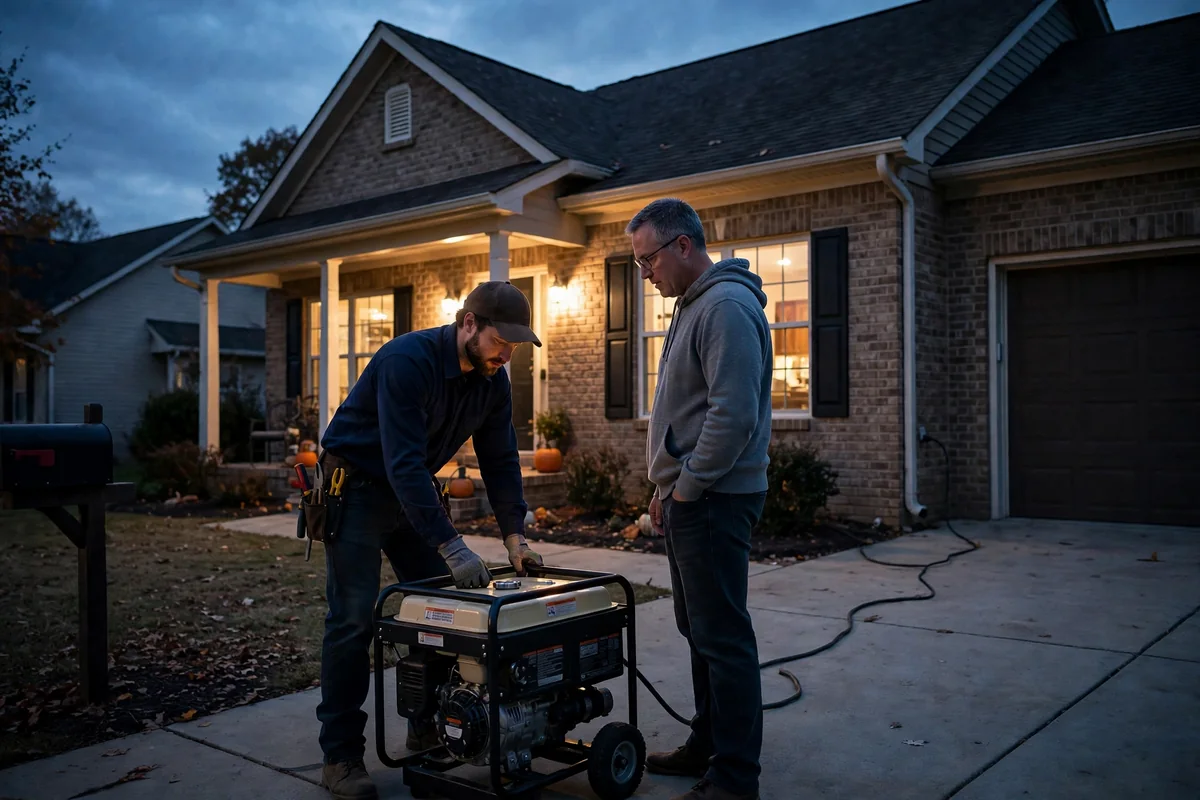
Every transfer switch we install ends with a rehearsal: utility power off, generator started cold, circuits transferred one by one, and the well pump or furnace asked to start under generator power while we watch the voltage hold. Roughly half of first rehearsals find something: a circuit that matters was left off the list, a generator that surges under pump start, a cord one size light for its length.

Finding that in daylight with an electrician present is the entire point. The alternative is finding it at midnight in an ice storm, which is when Robertson County outages prefer to happen and when hardware stores are closed. We leave you with a laminated start-up sequence taped inside the switch door, written from your rehearsal, not from a manual.

Interlock Kits in Depth: The Portable Generator, Done Legally

An interlock kit deserves its own explanation because it is the option most portable-generator owners actually buy. A listed metal plate, matched to your exact panel model, slides to make one action physically impossible: the backup breaker cannot be on while the main breaker is on. Backfeeding is prevented by geometry, not by memory, which is why inspectors accept it and why a sticky note on the panel door is not a substitute.

The kit pairs with an inlet box on the home's exterior, sized to its output, so it connects with one heavy cord instead of a snake of extension leads through a cracked window. During our load rehearsal we walk the exact start-up order (generator running and warm, main off, interlock slid, backup breaker on, circuits restored one at a time) and leave that sequence written at the panel. Portable power done this way is a system; done any other way it is an improvisation with a fuel tank.

Inside the Switch: The Failures We Actually Find

Transfer equipment fails in mechanical ways that surprise people expecting electronics. Main contacts erode a microscopic layer with every transfer under load, until resistance and heat announce themselves as flicker on generator power. Operating linkages wear and go out of adjustment, so the handle reports a transfer the contacts never completed. Control coils burn out quietly and wait for an outage to mention it. Sensing circuits misread frequency on older portable units and refuse a transfer that should happen.

Each failure has an instrument signature, which is why our repair visits test the switch under its real load rather than cycling it empty and calling it healthy. Contact condition, linkage travel, coil response and lug torque are measured and reported. A switch that passes under load in October is a switch you can believe in during January.

Cords, Plugs and Inlet Position: Details That Decide Midnight

The cord between a portable unit and the inlet is a component, not an accessory. Locking configurations such as the L14-30 standard exist so a connection cannot walk itself loose under vibration, and cord gauge matters across length: a long, light cord drops voltage until motors strain and it hunts. We size the cord to the run you actually have, from its parking spot to the inlet, not to the distance on a calm afternoon with the driveway empty.

Where the inlet sits follows similar realism. It belongs on the wall you can actually reach in bad weather, high enough to stay clear of standing water and snow, and far enough from its exhaust path that the connection can be made without standing in it. A flashlight stored at the panel, the start sequence written where the operator stands, and a cord that reaches with slack to spare: those three unglamorous details are the difference between a system and a story about the night it almost worked.

Service-Entrance Rated vs Standard: A Distinction With Teeth

Some automatic switches carry a service-entrance rating, meaning they include the main disconnect and overcurrent protection that let them sit directly between the meter and the home's panel. A standard switch lacks that rating and must live downstream of an existing disconnect. The distinction decides where equipment mounts, how much wall space the arrangement consumes, and whether a future panel project gets easier or harder, and it is invisible in most sales conversations because both boxes look like gray cabinets.

Enclosure ratings draw a second line. Equipment mounted outdoors in Robertson County weather needs a rating that shrugs off driven rain, and the gasketing and hubs that make that rating real are exactly the parts that fail first on bargain installations. When we quote changeover work we name the rating and the enclosure class in writing, because ten Tennessee winters will audit the choice more honestly than any brochure.

Living With a Manual Setup: The Human Checklist

A manual transfer arrangement asks something of the household: someone home, awake and able-bodied enough to wheel out a portable unit, in the dark, possibly in ice. That is a fair trade for many Springfield families and a poor one for others, and it should be chosen with eyes open. The safety half of the routine is non-negotiable: portable units run outdoors only, well clear of windows and doors, because carbon monoxide from a garage or carport placement is the deadliest generator mistake there is. Fuel storage, cord condition and a headlamp by the panel are part of the system, not accessories.

Automatic equipment removes the human from the sequence, which is why homes with medical equipment, frequent travel or a sump that cannot wait tend to land there despite the price gap. Neither answer is the smart one universally; the right one is the one your household will actually execute at the worst hour of the worst night, and we will ask those questions out loud during planning.

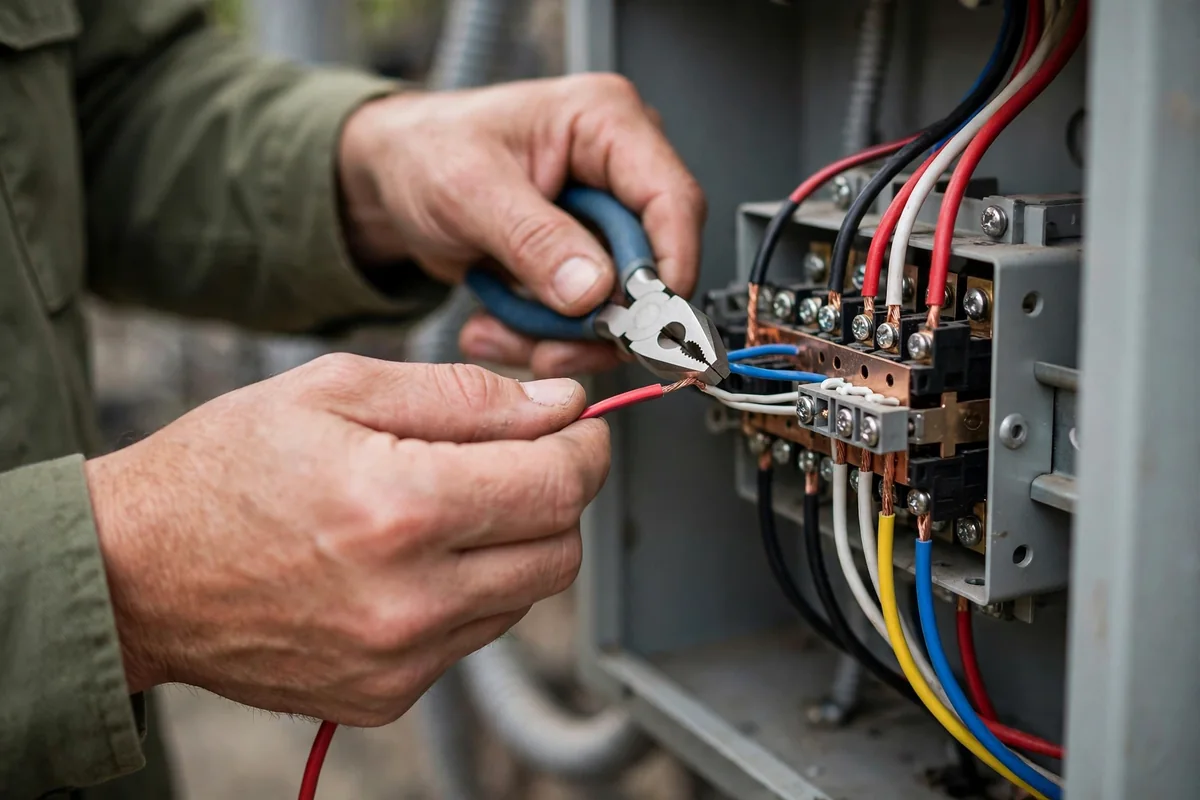
Close view of an electrician wiring circuit leads inside a manual transfer switch in Springfield

What Affects the Price

Transfer switch pricing depends on switch type and amperage, the number of circuits transferred, inlet box placement and cord length, and whether panel work is needed to fit an interlock. Repair pricing hinges on whether contacts, linkages or the whole switch need replacement; we test before quoting either. Our electrical cost guide breaks the pricing mechanics down further. The Ready.gov power outage guidance is the authority reference we point transfer switch installation customers to when they want the rulebook behind a recommendation.

Electrician running a generator rehearsal with a homeowner during a simulated outage in Springfield

DIY or Call an Electrician?

Resetting a breaker a single time and testing your own GFCI devices are fair homeowner ground. So is watching: note when the symptom happens and what else was running. Opening panels, replacing breakers and chasing faults through walls are not homeowner ground, because the mistakes there stay invisible. Repeats, heat or odor mean it is time to call (615) 716-3086.

Related Services in Springfield
Brands We Service

Our electricians service and install equipment from these manufacturers. Brand names belong to their respective owners; listing a brand means we work on that equipment, not that we are an authorized dealer for it.

Square DSiemensEatonLevitonLutronGeneracKohlerTeslaChargePointGE

Panel, breaker, switch, dimmer, generator and EV charging equipment serviced across Spring Hill, Springfield and the surrounding Middle Tennessee counties.

Transfer Switch Installation FAQs - Springfield, TN

A transfer switch is a separate panel that moves selected circuits between utility and generator with its own breakers. An interlock kit is a listed plate on your main panel that mechanically prevents the main breaker and generator breaker from being on together. Both stop dangerous backfeeding; the interlock costs less, the transfer switch isolates circuits more completely.

A generator connected without a transfer device can push power back onto utility lines at transformer voltage, which can kill a line worker restoring your street. It can also destroy the generator when utility power returns. This is the one generator shortcut that is never acceptable, and Springfield Electric Department crews are the people it endangers.

Switches are sized to your equipment and the transferred loads together: common residential setups run 30 to 50 amps for portable units and 100 to 200 amps for whole-house standby automatic switches. We match the switch to the equipment you own or plan to buy, not the other way around.

Worn linkages, tired contact springs and a failed inlet receptacle are repairs. Burned or pitted main contacts inside a sealed switch usually mean replacement, because contact condition is the switch's whole job. Our load test tells us which you have.

Yes, transfer equipment is permitted work and inspected, because it interfaces with the utility service. We file the permit and schedule inspection as part of the installation.

Start with health and damage control: water systems, refrigeration, heating circulation, one good lighting circuit, and outlets for medical devices and phones. Kitchen luxuries and the dryer wait for utility power. We build the list with you before sizing anything.

Need Transfer Switch Installation in Springfield?

Call Rapid Electrician Pros at (615) 716-3086. Regular hours Mon-Fri 7AM-7PM, Sat 8AM-4PM, and 24/7 emergency service across Springfield and Robertson County, TN 37172.

Call Now · (615) 716-3086
⚡ Tap to Call (615) 716-3086