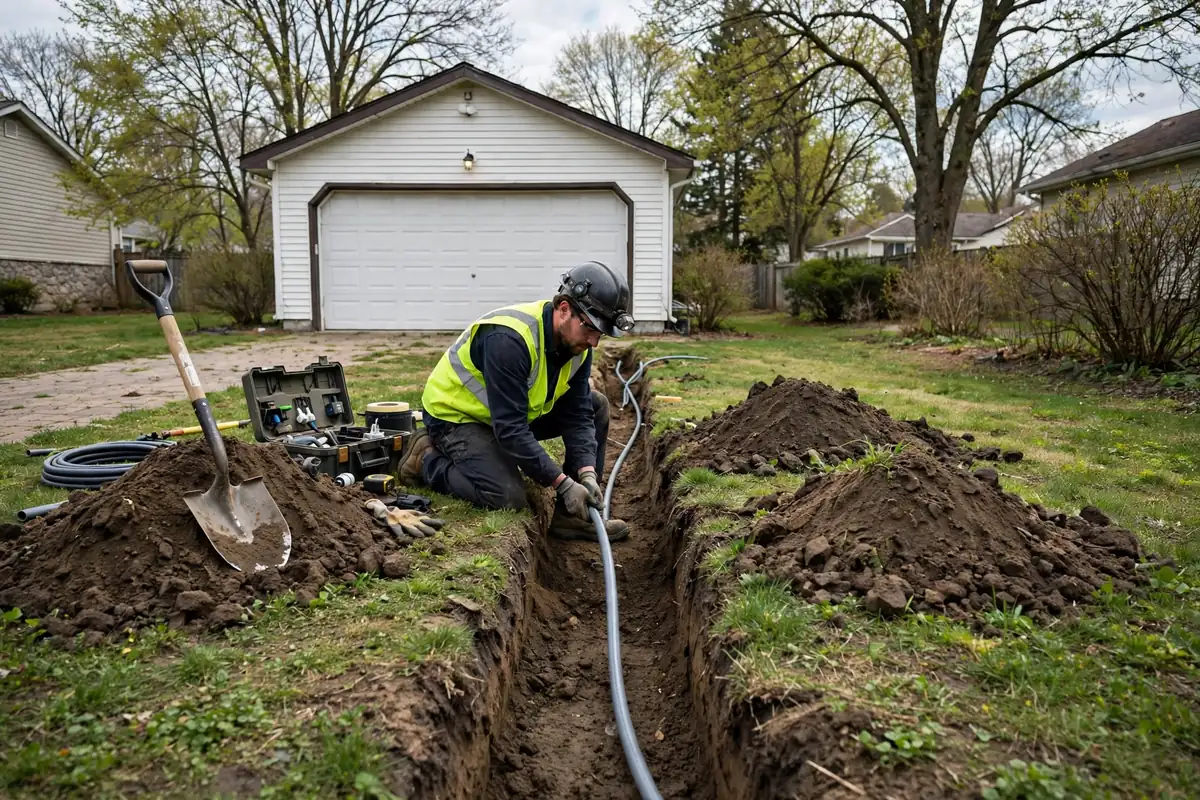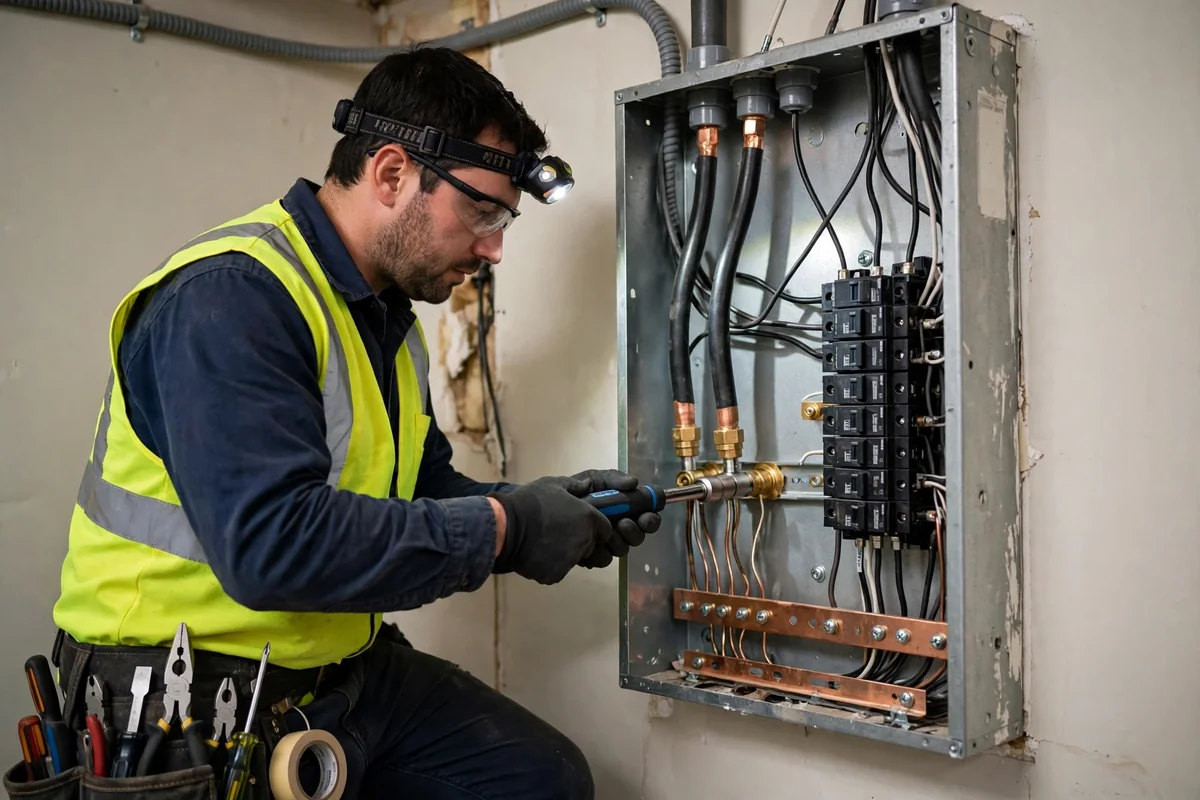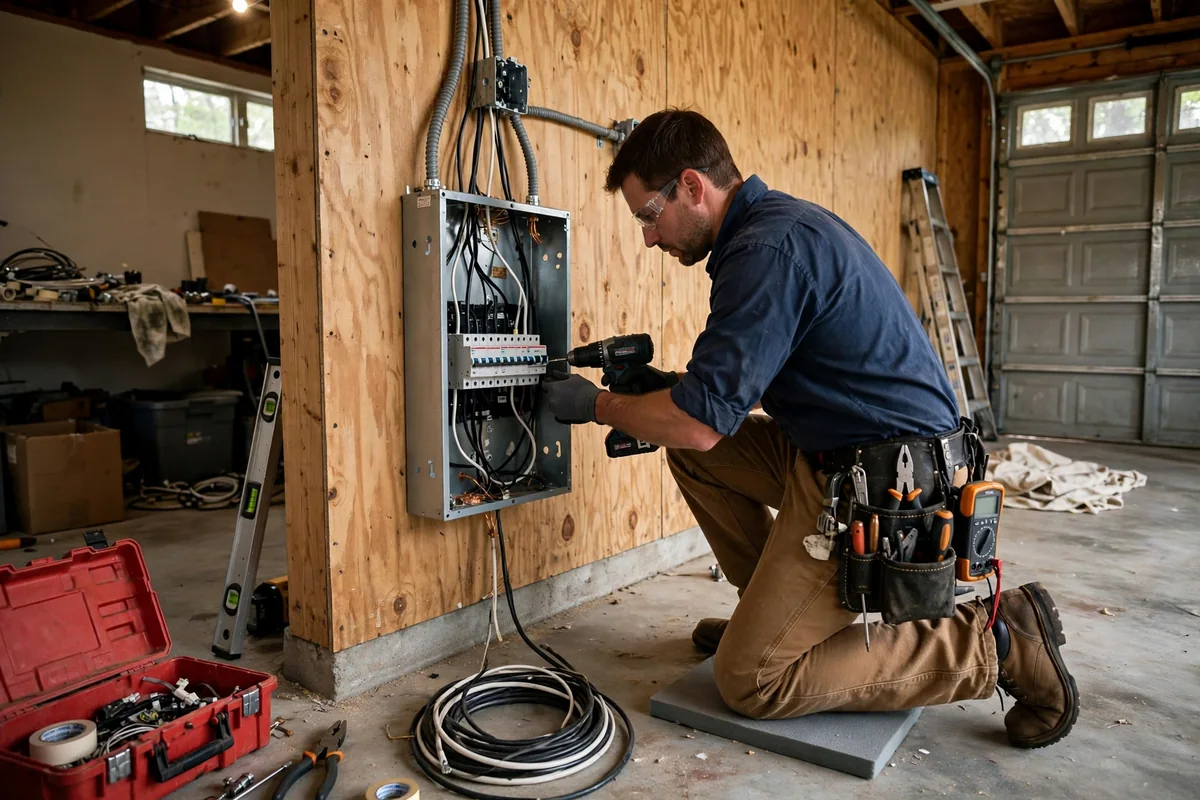
Subpanel Installation in Spring Hill: What the Work Involves
Spring Hill calls for subpanel installation rarely start with the service name; they start with a symptom that kept repeating. The work behind the symptom is putting in a subpanel where a house has run out of room or reach, and bringing tired subpanels back to standard: feeder sizing worked out from the loads the panel will actually carry, neutrals and grounds kept apart the way subpanel wiring rules demand, and subpanel repair for the loose lugs and shared neutrals that show up in older garage and addition work. Our coverage runs all of 37174, including the Harvest Point and Cherry Grove neighborhoods, and newer Maury County construction here pairs modern panels with heavy modern loads: pools, hot tubs, workshops and a charger in half the garages. Local conditions set the agenda. Long humid summers run air conditioners for months, spring storm lines crossing Maury and Williamson counties test service equipment, and a housing stock built mostly since the 1990s is aging into its first big repair cycle all at once.
Spring Hill's oldest service calls come from the farm-era homes along Main Street and Kedron Road, where the wiring predates the subdivisions by half a century.
When Spring Hill Homeowners Call About Subpanel Installation
- The main panel is full and the garage project needs four circuits
- A detached building needs real power, not an extension cord lifestyle
- An old subpanel shows shared neutrals, warm lugs or mystery breakers
- Workshop tools keep negotiating with the house for amperage
- An addition is framed and its electrical home has not been decided
- Lights in the addition sag whenever the compressor starts
A single occasional sign is usually minor. A pattern, repeats, combinations, escalation, is how Spring Hill homeowners should read it: book the visit before the system escalates for you. The common electrical problems guide sorts the everyday symptoms into safe-to-watch and call-today.
How We Track Down the Cause
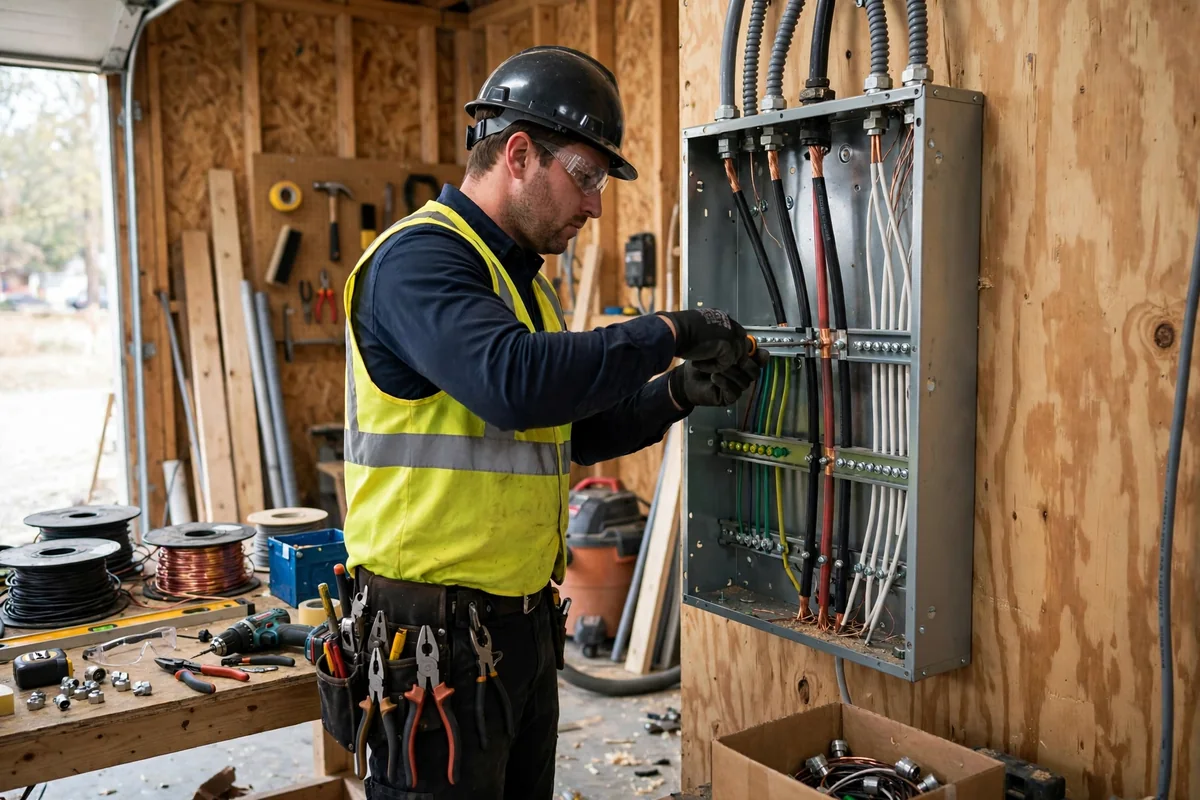
We approach a subpanel backwards, from the loads toward the service. First the inventory: what will this panel feed in five years, not just today, a welder, a charger, a freezer, a workshop's worth of tools. Then the route: how far the feeder travels and what it passes through. Then the main panel's spare capacity, because a subpanel spends the service's amperage, it does not mint more. On repair visits the order flips: torque and temperature at the lugs first, then the neutral-ground relationship, then the feeder breaker's behavior under a real load.
Before anything else we make the area safe: breakers isolated, circuits verified dead with a tester, and the panel photographed so every wire returns to a known place.
The Spring Hill Call Pattern
The subpanel map of Spring Hill is drawn by its garages. Production builders gave the boom subdivisions two-car garages wired with a single circuit and optimism; their owners have since added freezers, compressors, chargers and workshops. Add the detached structures on the older lots, barns and studios off Kedron Road, plus a steady stream of additions in Brixworth and Walden Creek, and you have the two shapes of the call: short feeder, full main panel, or long feeder, big plans. Both begin with the same inventory walk.