Circuit Breaker Repair in Spring Hill: What the Work Involves
For homes around the June Lake and Brixworth end of town, circuit breaker repair is a regular part of our week. At its core the service is breaker problems diagnosed at the circuit rather than the switch: breakers that trip on a schedule, breakers that have stopped tripping when they should, hot or buzzing breakers, and the load faults hiding behind breakers that were blamed first and tested last. Spring Hill-wide, the fast-growing north side near Buckner Road adds rooftops monthly, and new-build electrical questions arrive with every closing, which is why the local details matter as much as the technical ones. That mix shapes the work: Spring Hill has grown from a small town into one of Tennessee's fastest-growing cities, and its housing stock is young, heavily loaded and still expanding on both sides of the Williamson-Maury county line.
Spring Hill's oldest service calls come from the farm-era homes along Main Street and Kedron Road, where the wiring predates the subdivisions by half a century.
When Spring Hill Homeowners Call About Circuit Breaker Repair
- The same breaker trips at the same family hour every day
- A breaker stays suspiciously silent through faults it should catch
- Warmth and a faint buzz radiate from one breaker position
- The breaker resets only when it feels respected, briefly
- Rainy days have a breaker of their own, apparently
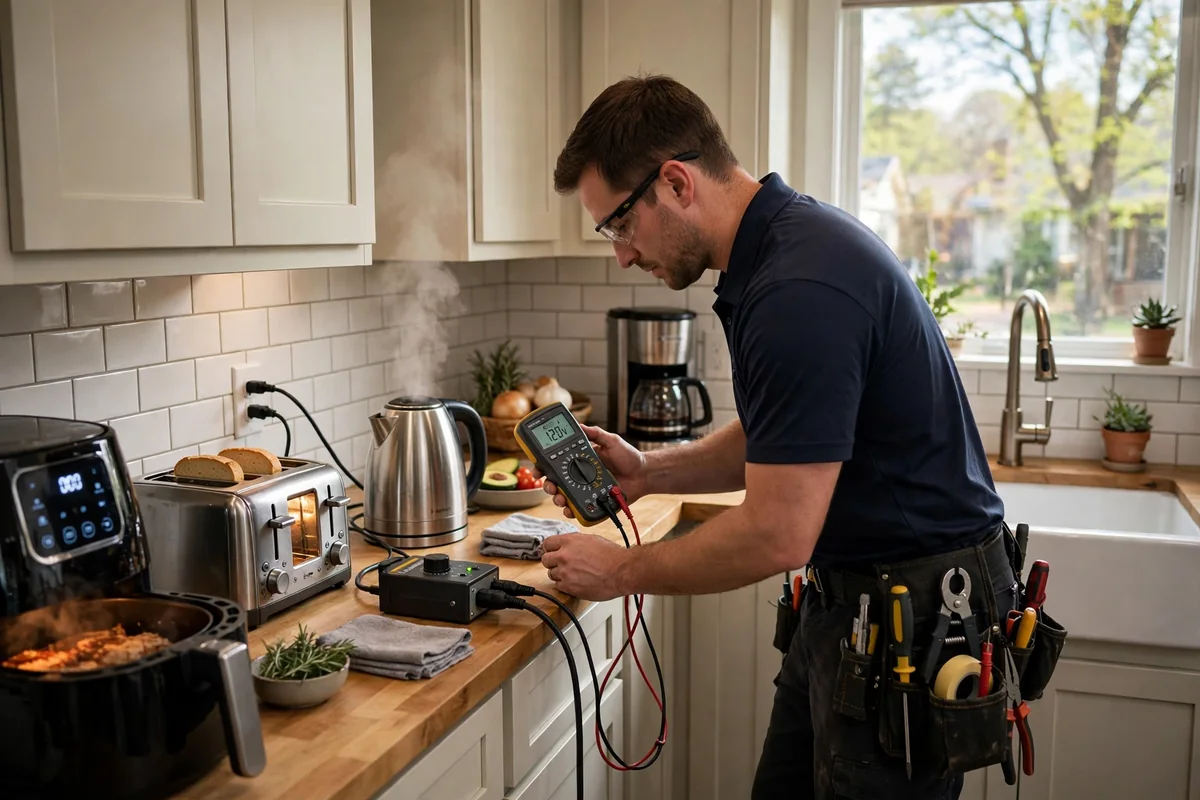
- Half a kitchen dies whenever the microwave clocks in
Treat the list as triage: mild and occasional can be scheduled, frequent or worsening should not wait, and anything hot or smelling of burning gets the 24/7 number. The common electrical problems guide sorts the everyday symptoms into safe-to-watch and call-today.
How We Track Down the Cause
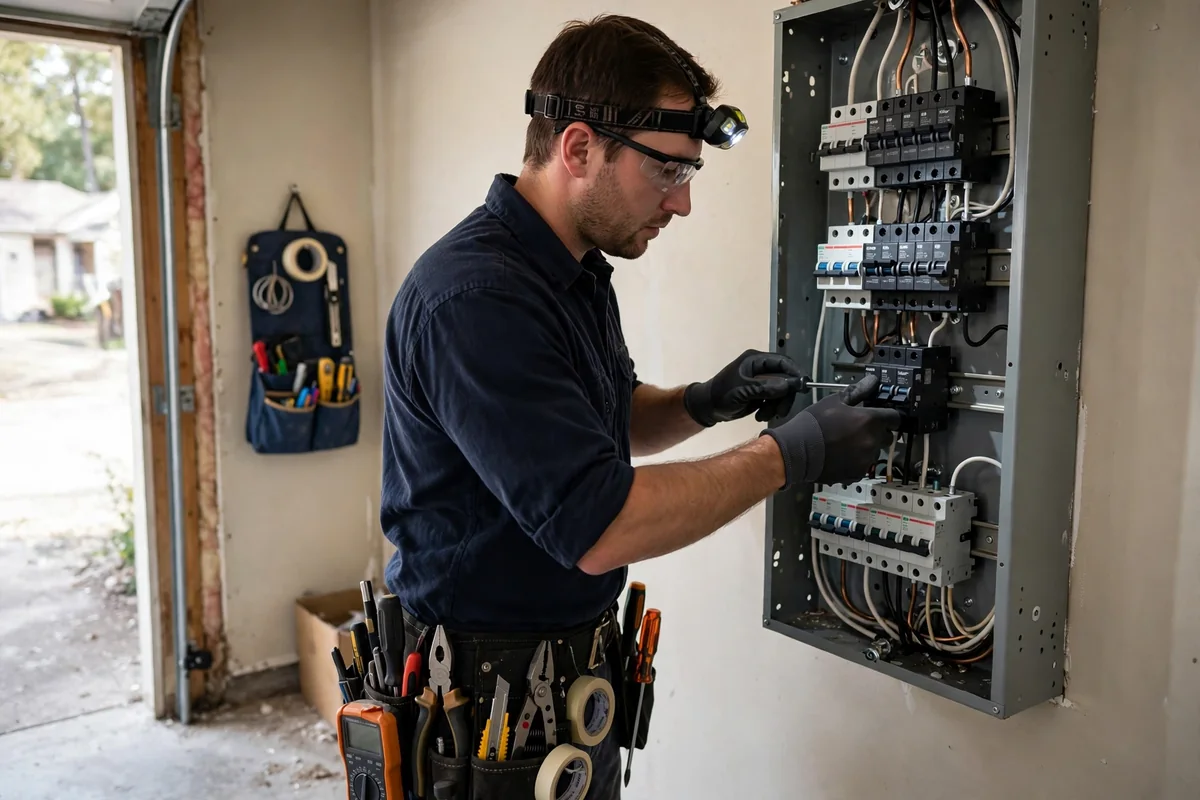
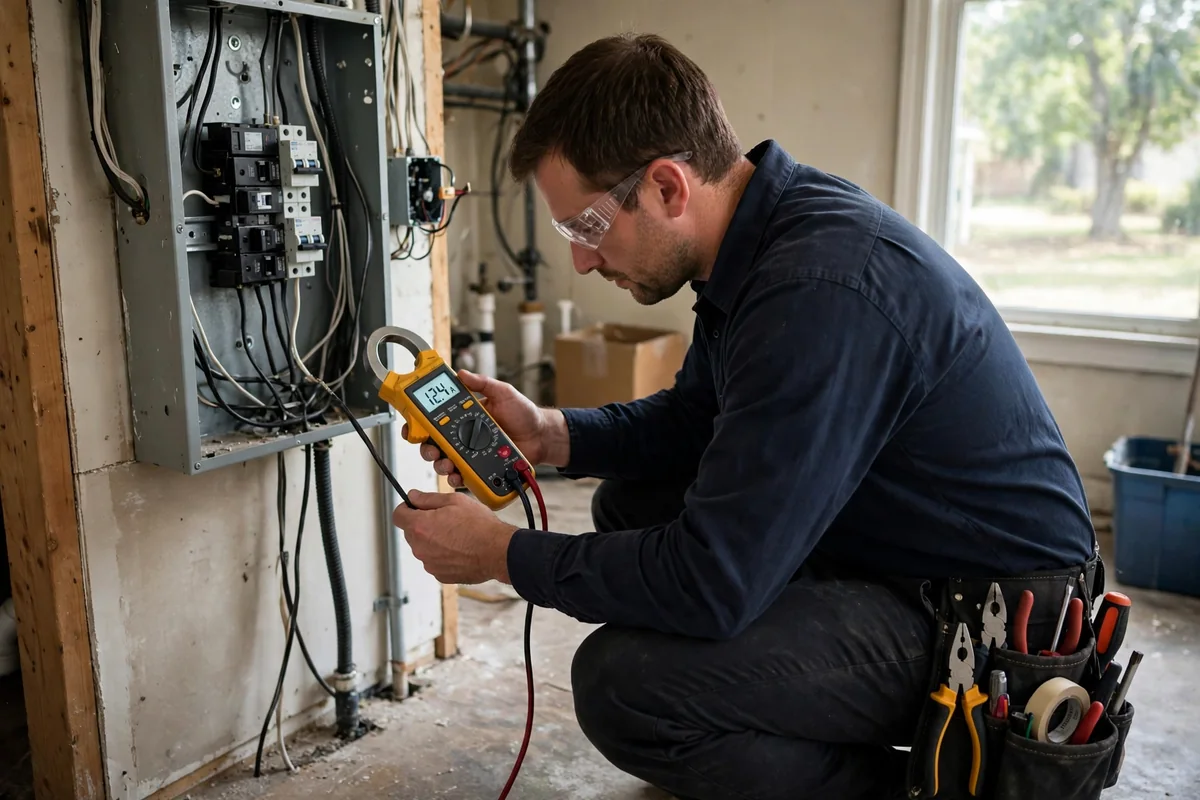
A tripping breaker is a messenger, and our first job is to read the message before replacing the messenger. We clamp the circuit's actual current, inspect the breaker and its bus connection for heat history, then walk the circuit's loads looking for the fault the breaker may have been faithfully reporting. Only after the circuit clears its tests does the breaker itself stand trial: swap-tested against a known-good unit under load. Replacements happen for evidence, not for hope.
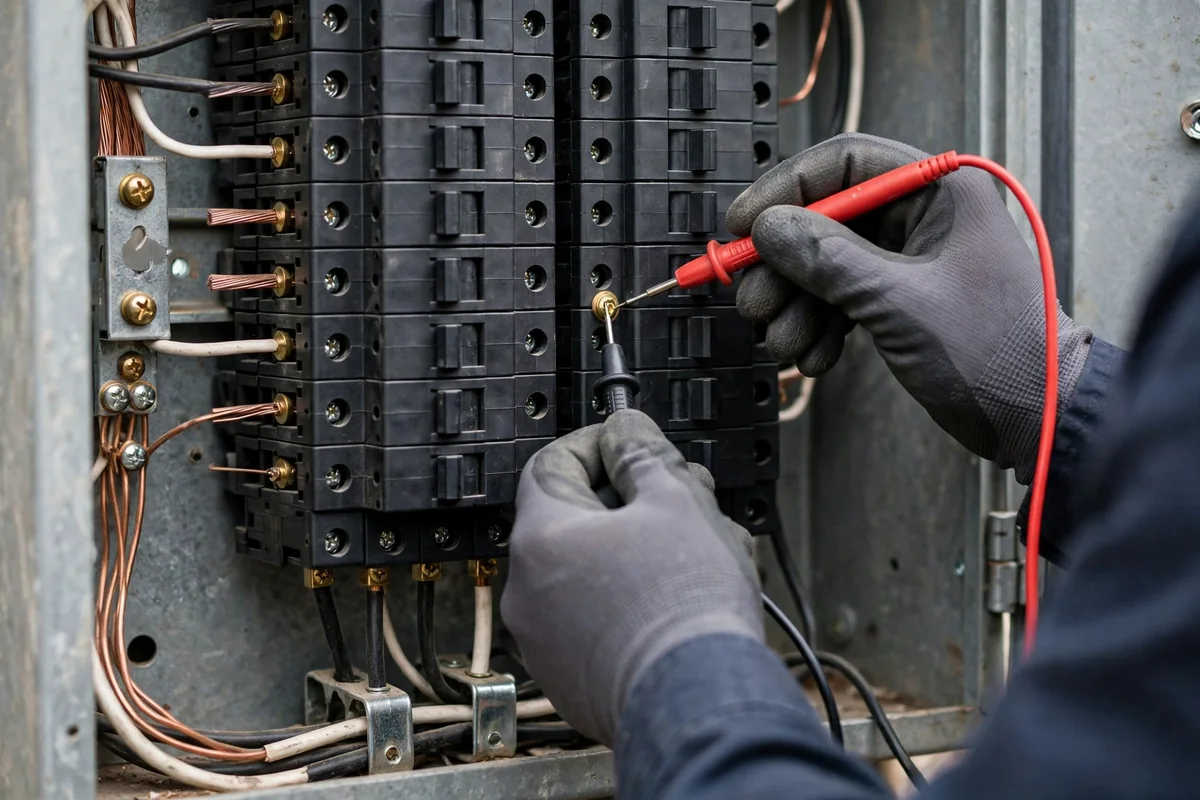
First comes isolation: the circuit is switched off, verified with a tester at the device, and only then opened up.
The Spring Hill Call Pattern
Breaker calls have a dramaturgy: the trip that ruins Sunday dinner weekly, the one that only happens when it rains, the silent warm breaker found by a homeowner's hand while looking for something else. Production-era Spring Hill housing contributes its share, panels full of breakers installed in one week of 2005 now aging as a cohort. The visits succeed by measurement: current, heat, and evidence, in that order, before any part is swapped.